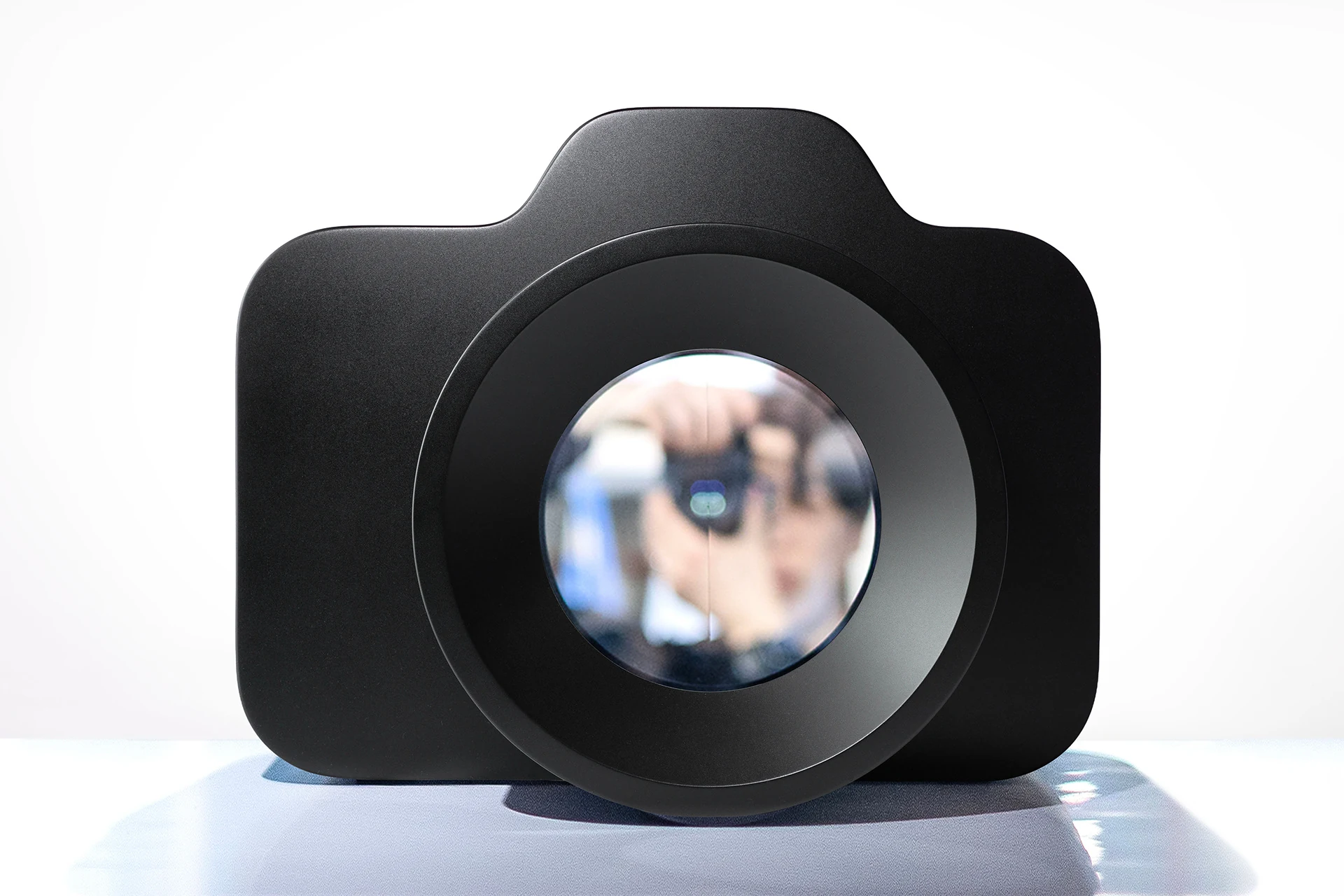
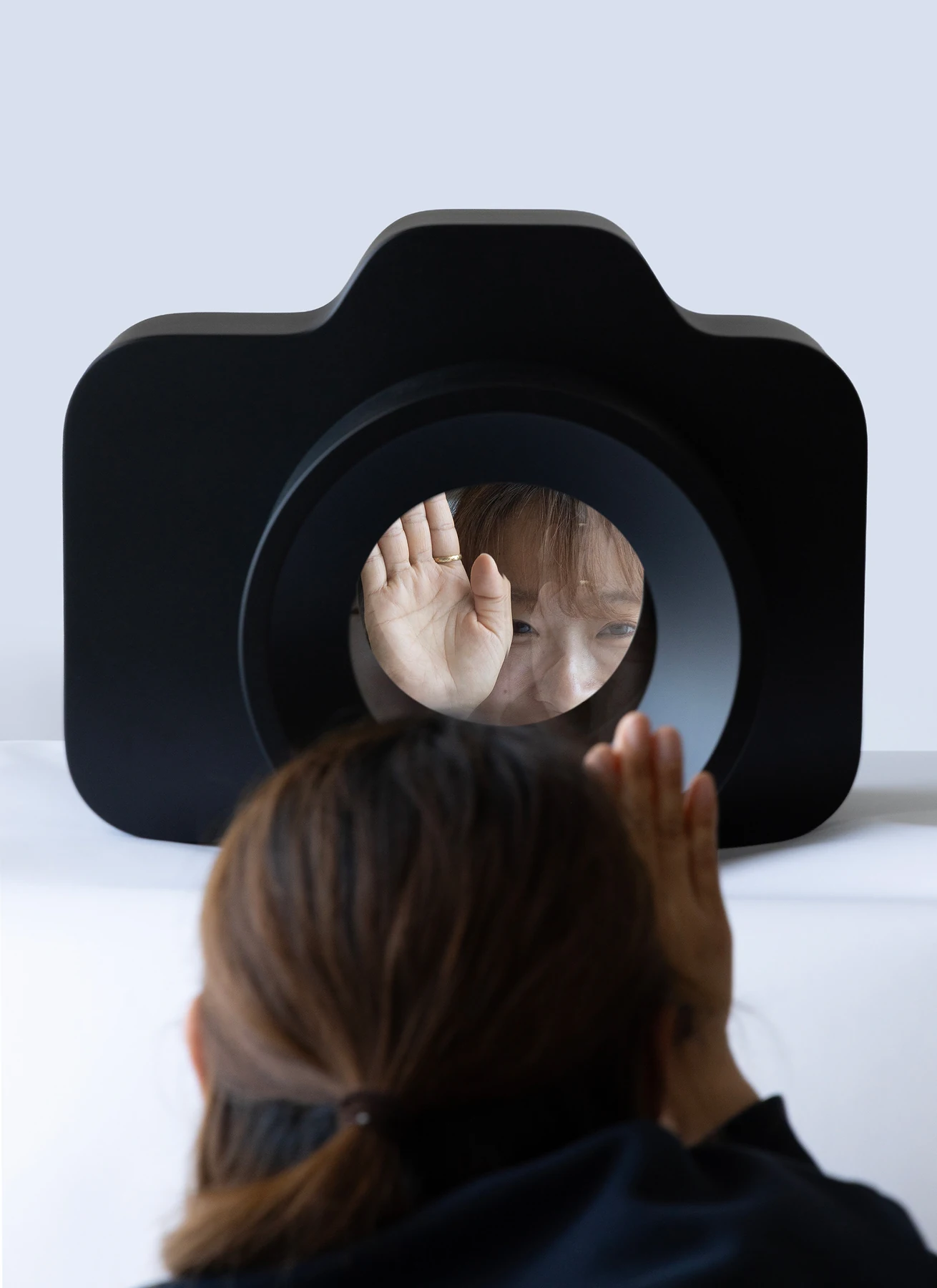
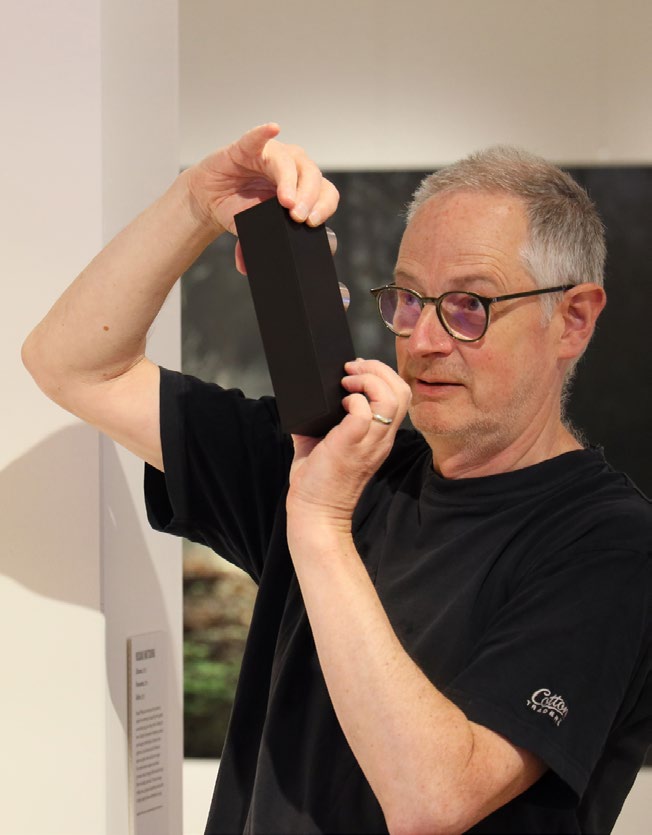
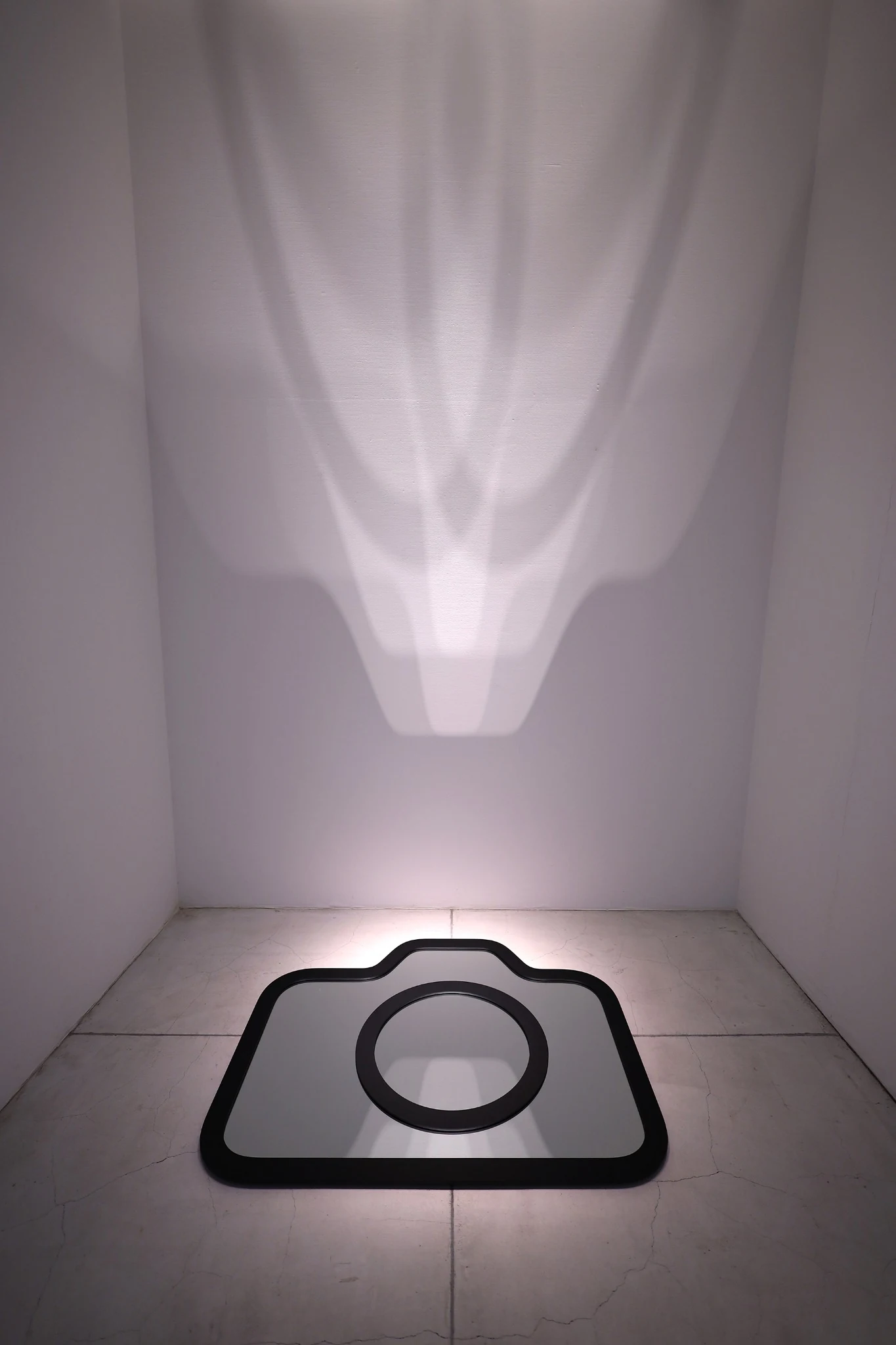
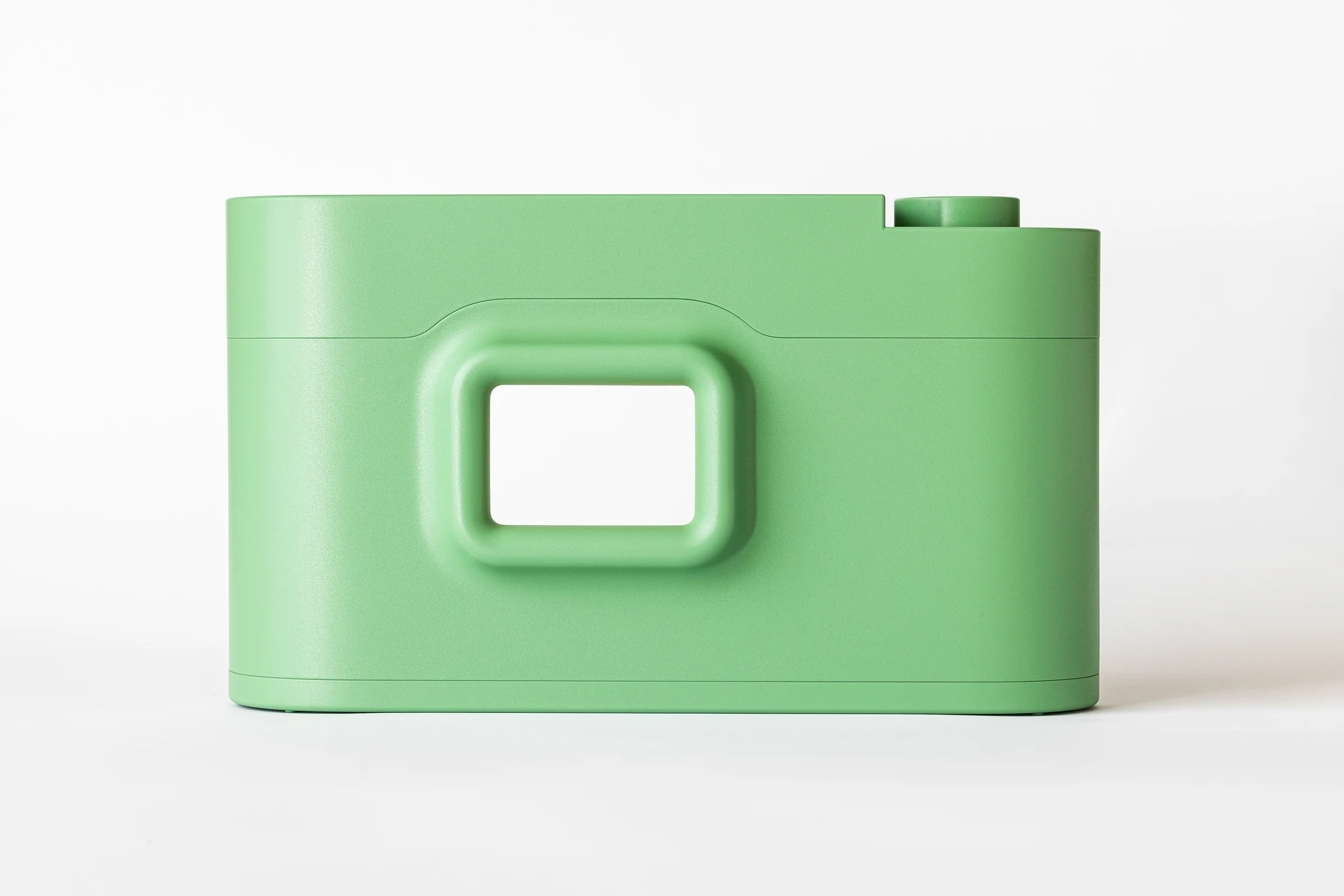
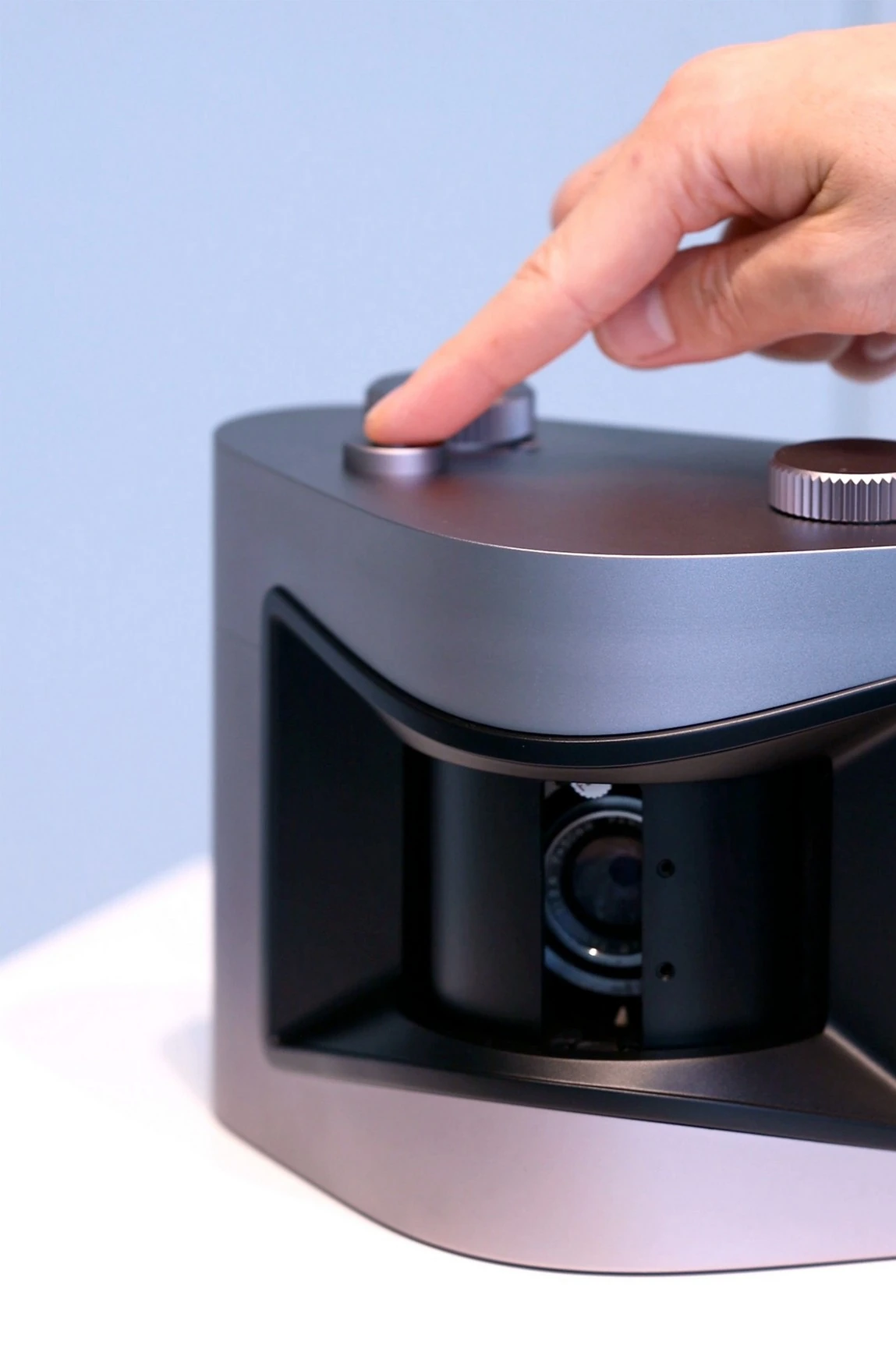
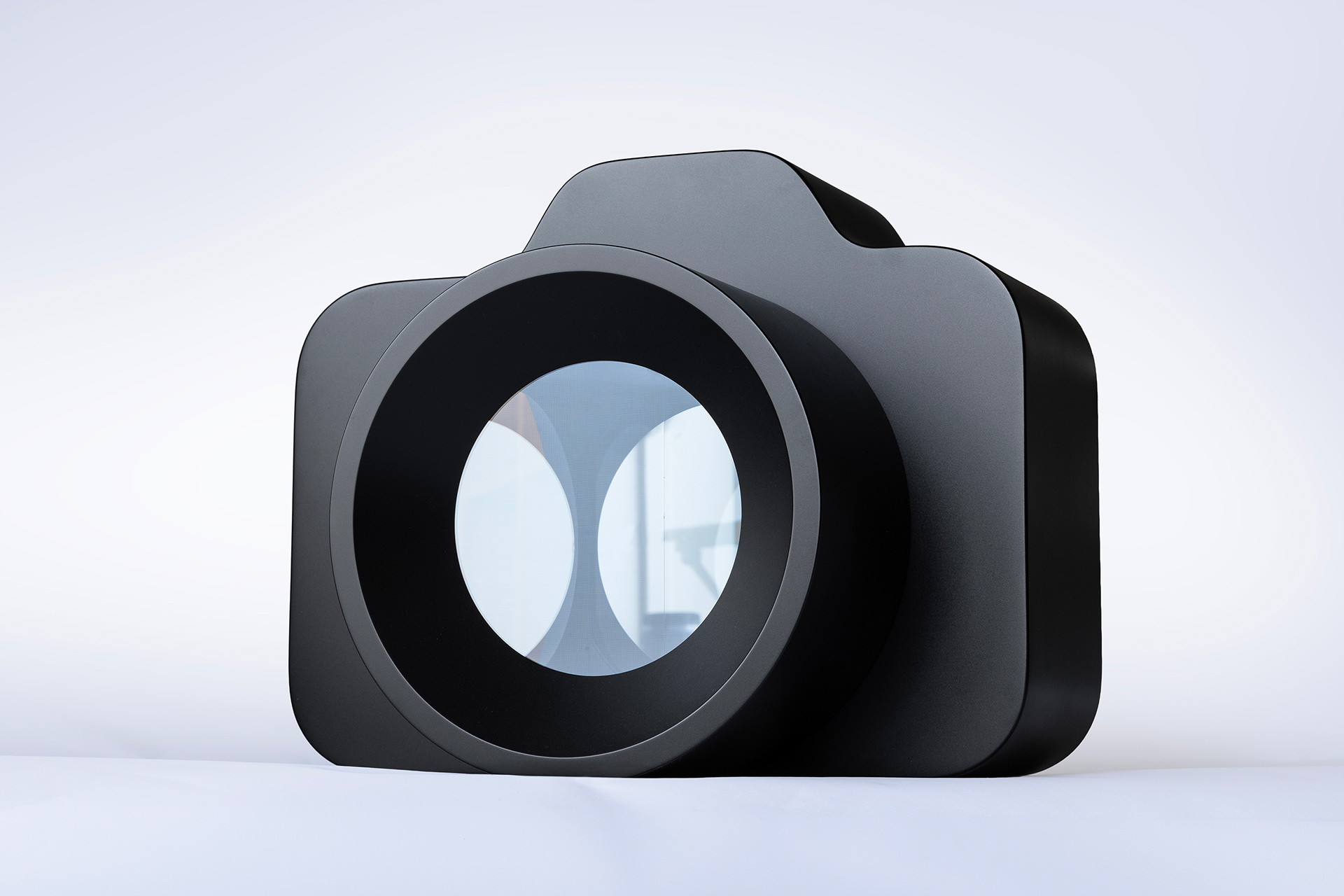
Reversal, 2025. A viewer encounters the non-reversing mirror.
Selected work / Sculpture
Reversal 2025
The viewer becomes the subject.
A non-reversing mirror sits inside a camera-shaped body. When the viewer raises a hand, its orientation differs from the familiar response of an ordinary mirror. The camera form places this encounter with oneself in the position of a subject being viewed or photographed. The question concerns both the face we recognise and the position from which we recognise it.
Camera-based apparatus. ABS resin, glass non-reversing mirror, chemical wood, acrylic urethane paint. W445 × H350 × D330 mm.
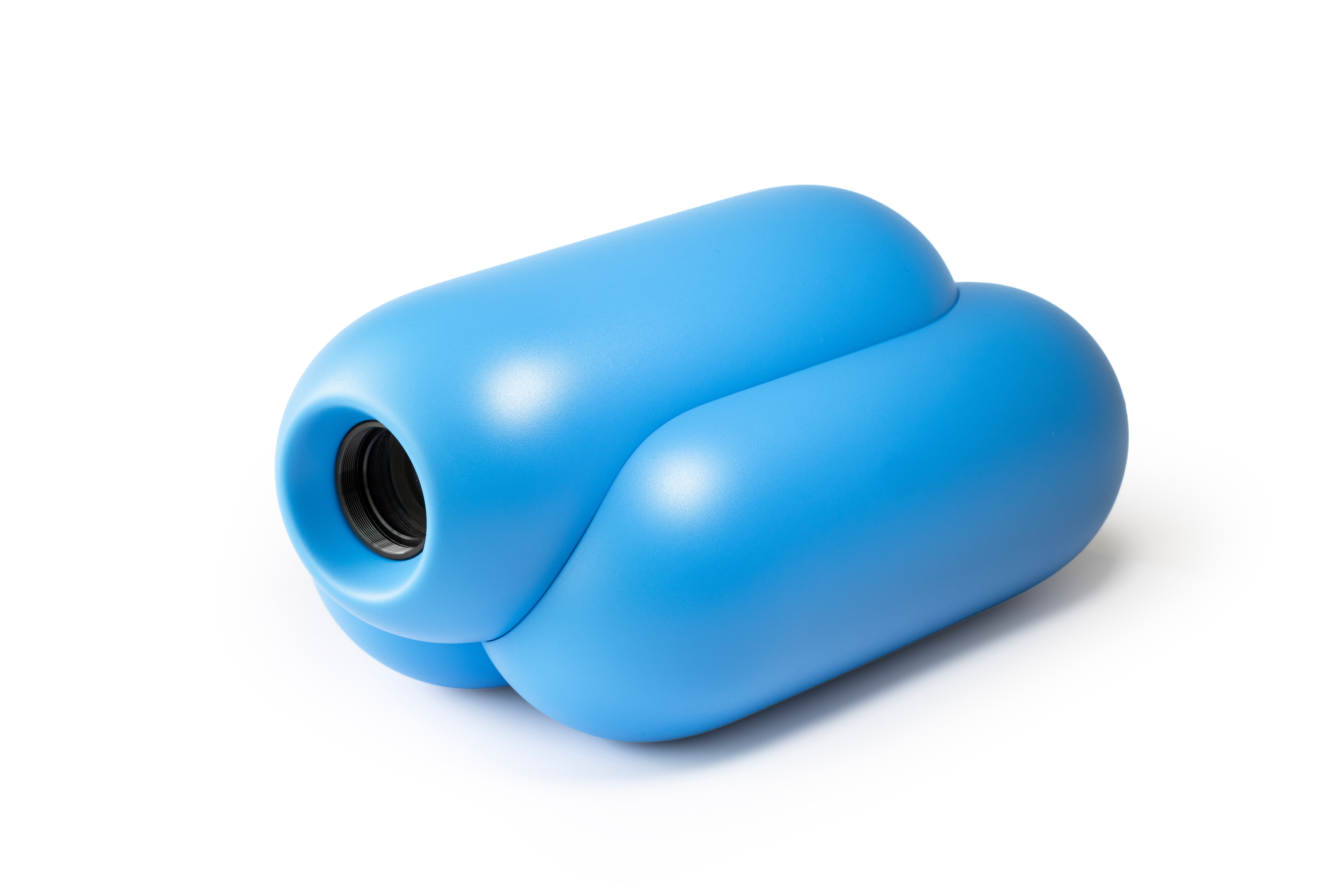
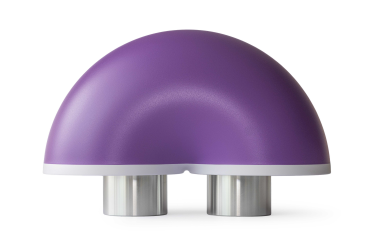
Activation recording · 15 seconds · with mechanical sound. It shows the rotation, not the entire setting and rewinding sequence.
A mechanism becomes a physical event.
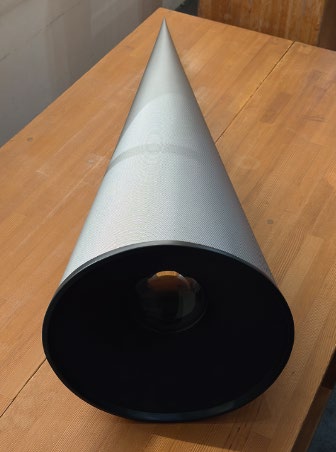
Panorama reconfigures the rotating mechanism of a panoramic film camera from roughly seventy years ago. Set the dial, press the release and follow the spring-driven rotation; then rewind the mechanism by hand. Sound and vibration accompany the sequence. A mechanism often hidden behind a finished photograph becomes a physical event with its own duration.
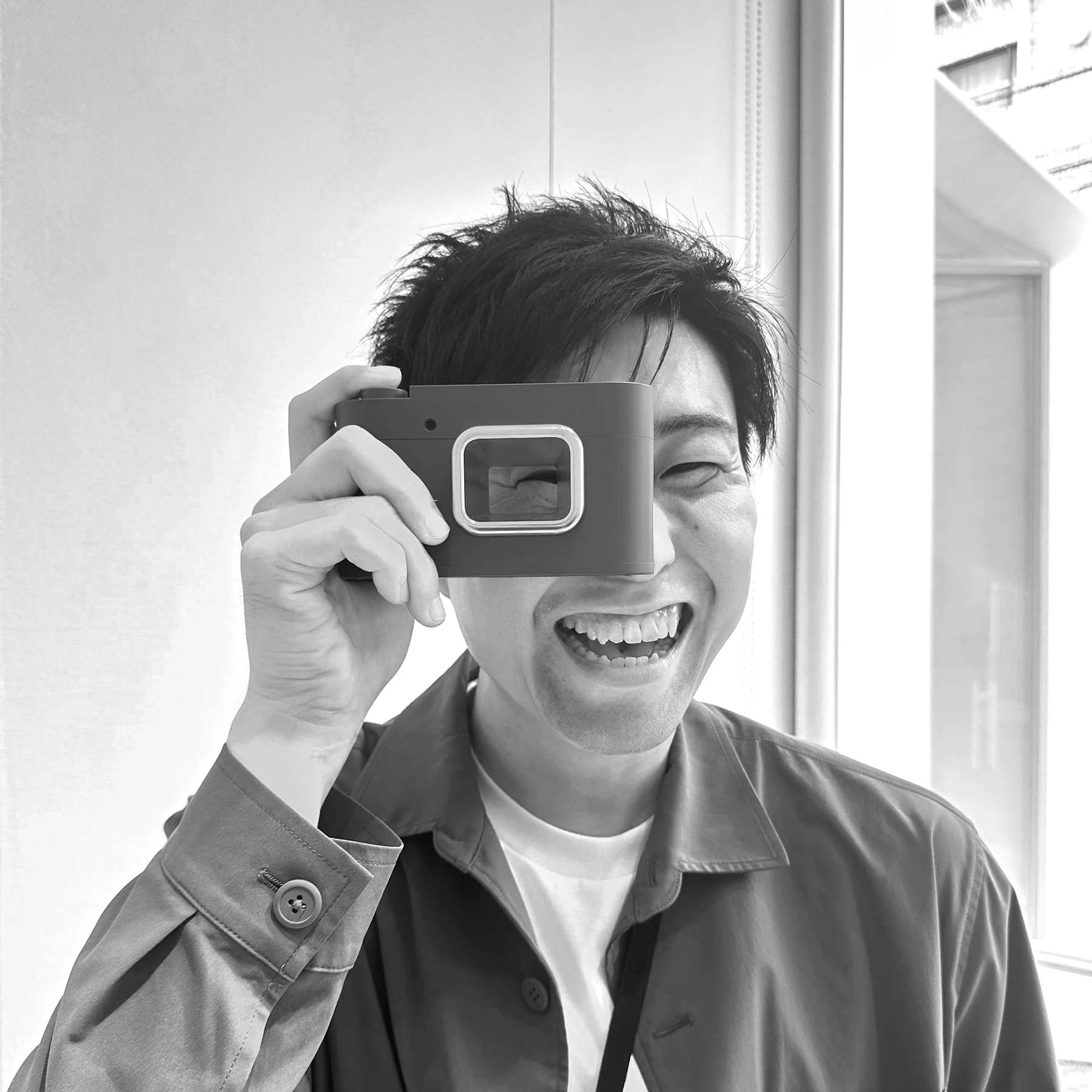
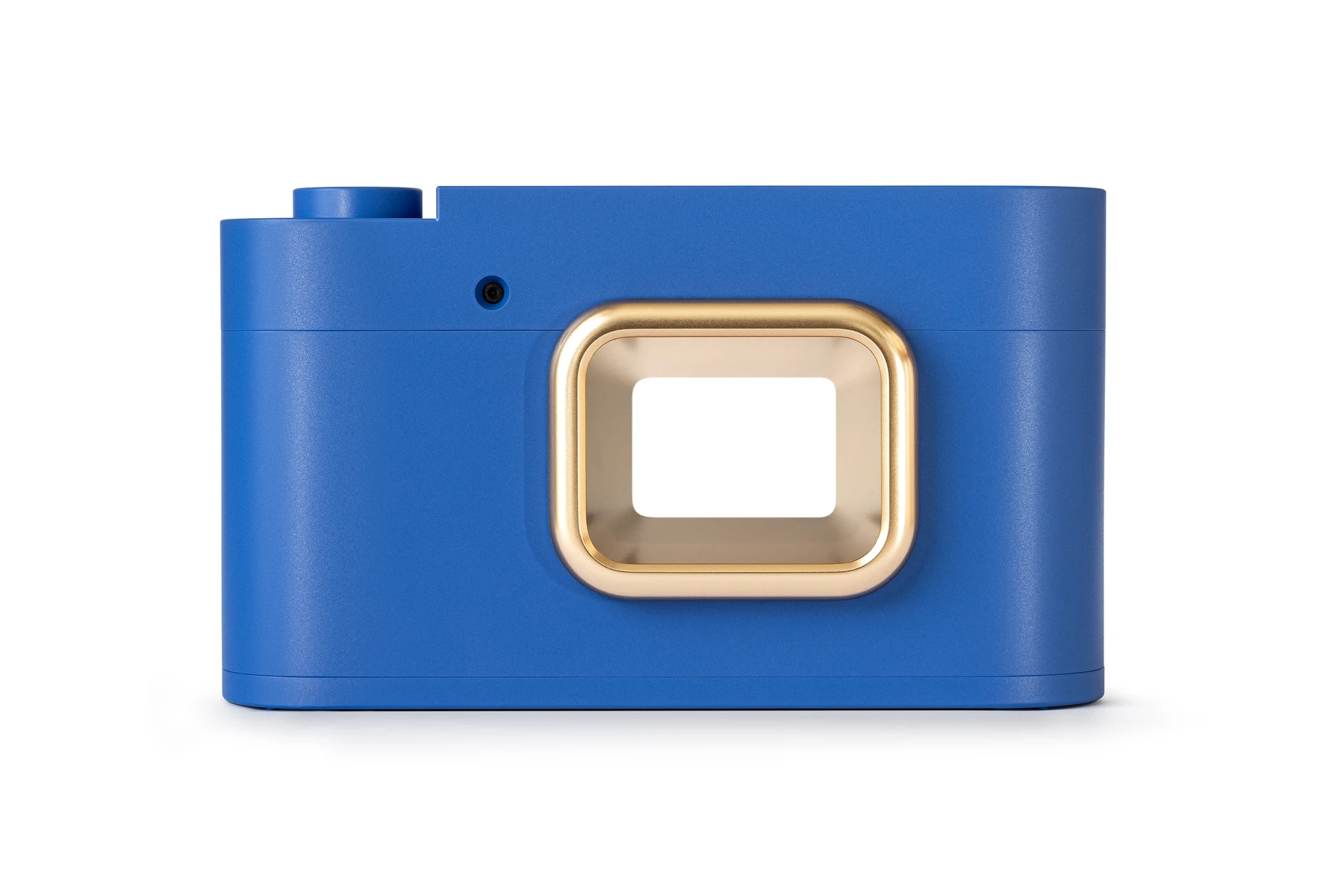
Eye to Eye, 2024. The person holding the camera remains visible.
Selected work / Functional camera
Eye to Eye 2024
The photographer stays visible.
Eye to Eye places an open passage at the centre, where a lens is usually expected. A separate, smaller lens records photographs. The screenless camera keeps the photographer’s eye visible. Looking and being looked at can happen at once: making a photograph becomes an exchange with the person before the camera.
Actual visitor encounters · Aesthetica Art Prize 2026 finalist exhibition. Exhibition record ↗
Related work / Installation
Background 2026
The background looks back.
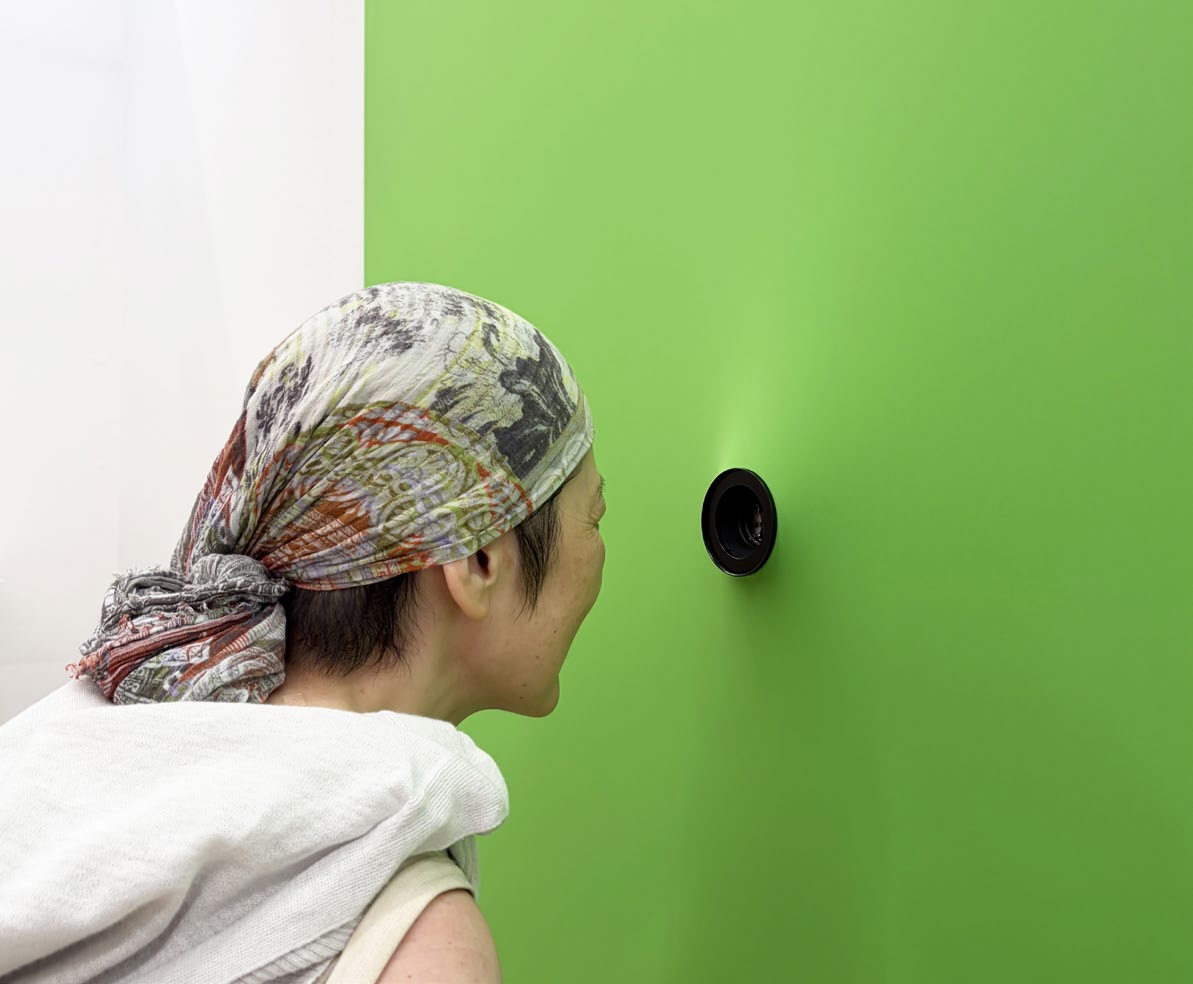
Background, 2026. Installed work and viewer.
A surface made to disappear appears to observe us.
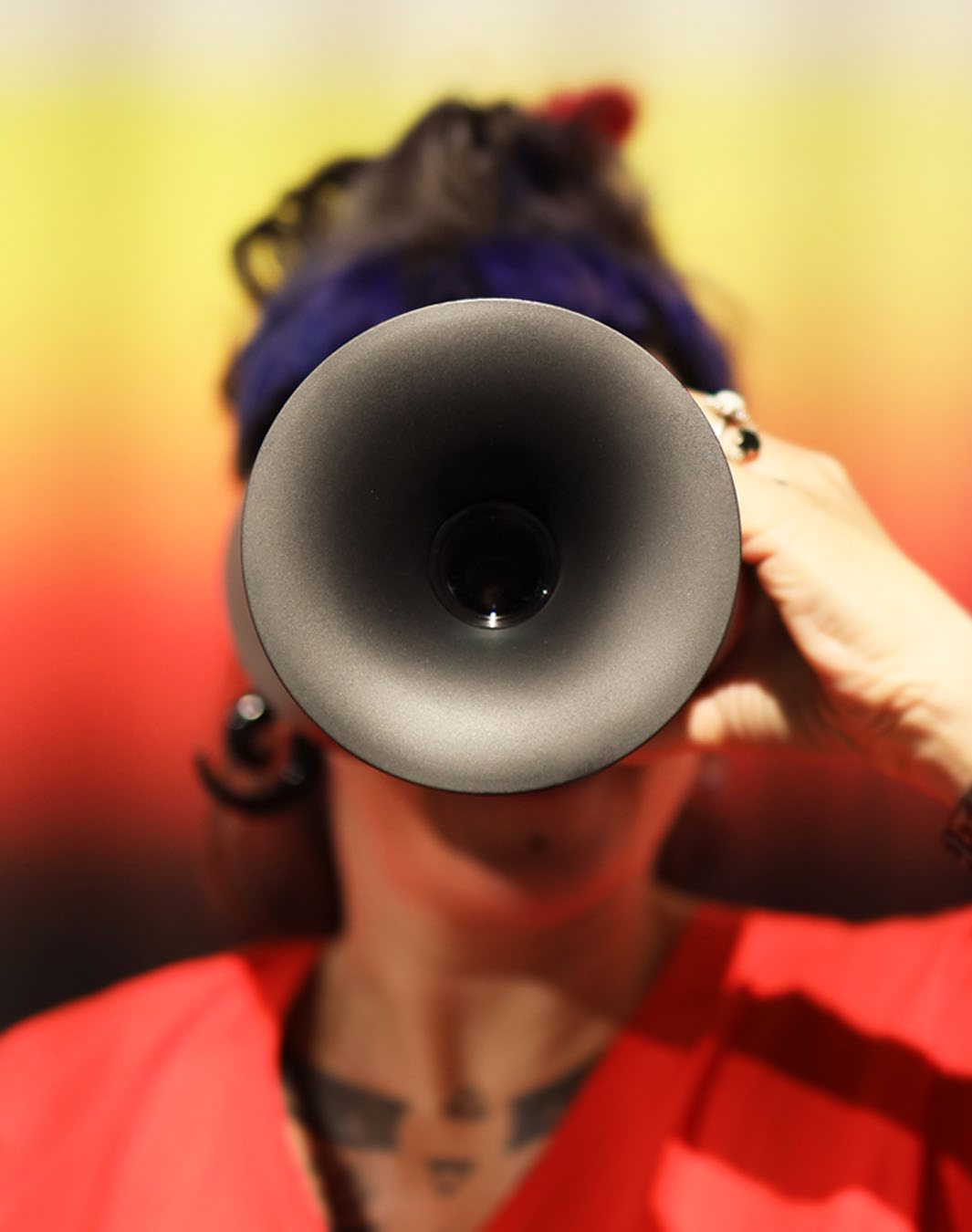
A lens interrupts a chroma-key green surface, a background normally prepared for removal. It appears to look back at the viewer, shifting the relation between foreground and background. No image is taken or stored.
30th Annual NO DEAD ARTISTS, Ferrara Showman Gallery, New Orleans, 2026. Matsuura’s works are displayed on the central plinth. Photograph: Mike Smith.
Memory as Distance, solo exhibition, ISETAN SALONE TOKYO, 2025.DESIGNTIDE TOKYO, Rinnai Aoyama, Tokyo, 2025.
More installation views Ars Gallery / Ferrara Showman Gallery
Forms of Memory, solo exhibition, Ars Gallery, Tokyo, 2024.30th Annual NO DEAD ARTISTS, Ferrara Showman Gallery, New Orleans, 2026. Matsuura’s works are displayed on the central plinth. Photograph: Mike Smith.
02 / Questions, experiments & decisions
The Story
What do we choose to do ourselves?
Active Memory is my inquiry into the actions around a record: choosing, looking, waiting and revisiting.
The artist’s account
Active Memory
Choosing how we take part.
I have spent much of my working life helping to make cameras easier to use. Automation can remove technical obstacles and make recording available to more people. I still work on these possibilities as an industrial designer. My art practice grows from this ongoing work and from questions about our participation in recording. The camera is both a tool I help develop and a structure I can reconsider through sculpture.
A turning point came during the development of IVY REC, known in Japan as iNSPiC REC. Conversations with users shifted my attention from specifications towards the experiences people wanted to keep. The screenless camera made that concern part of a product. In Eye to Eye, I took it in another direction: the opening passes through the camera body, exposing the photographer’s eye. A decision about viewing becomes a decision about who is visible to whom.
I call this inquiry Active Memory. These changes make familiar actions less automatic: a viewer waits, adjusts their position or finds that the person looking is also visible. My knowledge of industrial production gives those questions a material form. I want the question to remain with the person after the optical effect has become familiar: how do we want to participate in the technologies through which we record and revisit our lives?
EOS R development · physical models for testing the grip and control layout. Industrial design documentation from the artist’s portfolio.
During EOS R development, repeated physical prototypes made differences in the grip and control layout available to test. A small change to the object could change how the hand approached it.
The photographs document camera development. The same attention to hands, eyes and material structures informs Matsuura’s sculptures.
Industrial design / IVY REC, 2019
IVY REC development. Physical models, from the artist’s design portfolio.
A frame for looking.
The clip on the completed camera also serves as an open viewfinder.
Artwork / Eye to Eye, 2024
Eye to Eye. Completed artwork, with a viewing passage and a separate imaging lens.
A passage between people.
The opening continues through a functioning camera, allowing the photographer to remain visible.
Matsuura traces the concern behind Eye to Eye to his work on the screenless IVY REC. An opening used to frame a view becomes a way of reconsidering who is visible to whom.
Decisions in the artworks
The structure changes what a person can do.
Completed works, shown here to make their construction and operation visible.
Eye to Eye
Open the viewing passage.
Completed work.
The opening continues through the body of a functioning camera. The person making the photograph can remain visible to the person being photographed.
Yasuaki Matsuura is a Tokyo-based artist and industrial designer working with sculptures and optical apparatuses. Born in Tokushima, Japan, in 1990, he graduated in Product Design from Kanazawa College of Art in 2013. He worked in Canon’s Camera Division from 2013 to 2021, contributing to the EOS R body, RF lenses and the screenless IVY REC. He has continued independently in camera, imaging and product development since 2021, including hardware and interface design for Saveclip.
Since 2024, he has developed the body of sculptures and optical apparatuses presented here. It draws on more than a decade of industrial design experience, including the construction, materials, mechanisms and interactions of imaging devices. Through Active Memory, Matsuura examines how recording technologies distribute attention and action between a person and an apparatus. His works introduce reciprocal looking, manual operation, altered distance and unfamiliar reflections into that relationship. He approaches memory through the acts that surround a record: choosing what matters, attending to a moment and encountering it again. Design and art remain concurrent parts of his practice.
The continuing design practice
Selected camera & interface designs
EOS R system
2018
Camera-body and lens design within Canon’s development team.
For kyu camera, I tested a form with a 3D-printed model, then refined its size, grip and controls. I kept a physical shutter button so that recording remained an action felt through the hand. Camera design and art remain concurrent practices.